

Chart of the Day: Huawei or the Highway? Where They Stand
It wasn’t so long ago that Huawei Telecommunications Co. Ltd. was being written off as a copycat of Western giants such as Ericsson and Cisco — one which thrived by undercutting its more established peers by selling cheaper and inferior telecom infrastructure to developing countries.
Times have changed. The company has rapidly shifted gears from imitator to innovator, and is looking to develop the world’s next generation of 5G mobile infrastructure. Governments from Argentina to Saudi Arabia are looking to work with the global giant.
But this rise to prominence has brought new challenges. The United States, engaged in a heated trade war with China, has voiced security concerns about using Huawei’s equipment in core national infrastructure and has been urging its allies to turn their backs on the company. Australia has moved to ban Huawei’s 5G offerings altogether, while others including the U.K., Germany and France are mulling different kinds of security responses. So who’s in, who’s out, and who’s unsure? Caixin lays out the current state of play below.
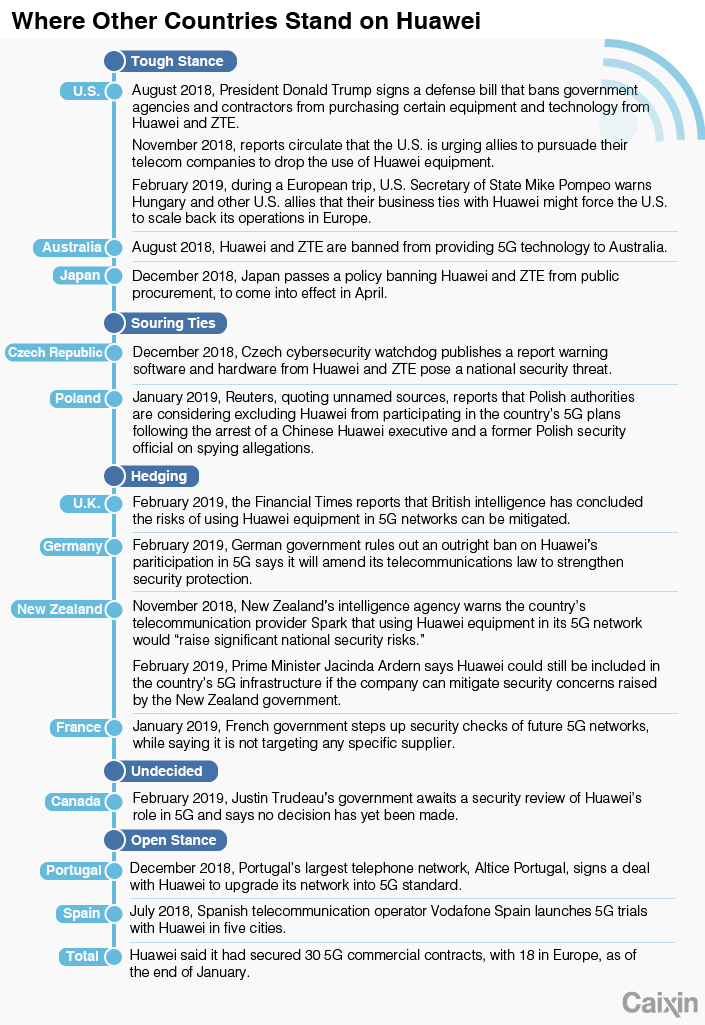 |
Contact reporter Charlotte Yang (yutingyang@caixin.com)



- 1Covid-19 Infections Surge Across China as Virus Reclaims Dominance
- 2Analysis: China Likely to Forgo Major Stimulus as Growth Target Remains in Reach
- 3DeepSeek Releases Official V4-Flash Model as China’s AI Race Intensifies
- 4In Depth: Thai Buddhist Amulets Draw China’s Anxious Youth — and Laundering Networks
- 5Exclusive: Over 310 Accounts Unmasked in U.S. Insider Trading Suit Linked to Chinese Brokerages

- 1Power To The People: Pintec Serves A Booming Consumer Class
- 2Largest hotel group in Europe accepts UnionPay
- 3UnionPay mobile QuickPass debuts in Hong Kong
- 4UnionPay International launches premium catering privilege U Dining Collection
- 5UnionPay International’s U Plan has covered over 1600 stores overseas

 Sign in with Google
 Sign in with Facebook
 Sign in with 财新